When a marriage ends, the emotional burden can be difficult to bear – and with it comes a great many practical headaches, the most painful of which is usually money.
In this piece, you’ll learn:
- The recent data about women’s and men’s finances post-divorce
- The issues your female clients could face when going through one
- How these financial challenges could affect their retirement.
The data paints a bleak picture of women’s finances after divorce
There is plenty of evidence to suggest that women are worse off after divorce than their male counterparts.
- Legal & General says women are twice as likely as men to reduce work hours post-divorce due to childcare responsibilities, and their income is cut in half on average compared to men’s, which falls by 30%.
- Forbes reports only 31% of UK women outearn their partners, leaving them vulnerable if they divorce and need to fund their lifestyle alone.
- NOW: Pensions reports women are often shortchanged where pensions are concerned, with only 2 in 10 divorces having a pension sharing order. This, and other issues including career breaks, leaves women entering retirement with 12% of the pension wealth their male peers have accrued.
- The BBC says 36% of divorcing couples in 2025 were over 50, compared to 8.7% in 1990.
Divorce affects both parties financially, but it is clear that female clients may need even closer attention from you, their financial adviser, particularly if they’re approaching retirement at the same time.
Divorce can present additional retirement planning challenges, making it important to review long-term financial goals
Above, you read two statistics from the BBC and NOW: Pensions about how divorced women might find it even harder to reach their retirement goals.
Taking one step back for a moment, it’s important to consider the context of women’s retirement options – regardless of marital status.
- The Department for Work and Pensions reports that the gender pension gap is 35% as of the latest available data.
- Legal & General says women hold nearly half the pension savings of their male peers (£81,000 versus £156,000).
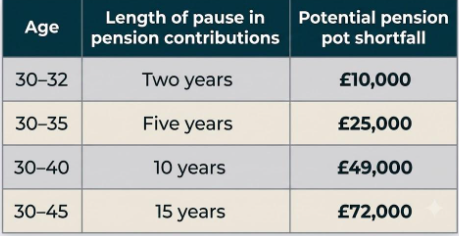
As discussed above, women are more likely to take time off work for caregiving responsibilities (either for their children or elderly parents). The sad reality is that these breaks in employment could erode women’s retirement funds significantly.
These projections are based on a person starting work at age 22 on a £25,000 salary, paying minimum monthly auto-enrolment contributions and reaching a projected retirement pot worth £210,000 by age 68.
Source: Standard Life
3 ways financial advisers and planners can support women after divorce
1. Reassess and reassure
One of the first questions you might hear from a woman post-divorce is: “Can I still afford to retire?”
This may be particularly pressing if she is over 50 and already has her sights set on retirement.
Of course, her income and wealth circumstances may have changed. It’s important to do another audit of her finances – almost treating her like a new client – to reassess her retirement position.
No matter the outcome, part of your role is to reassure your client that it’s possible to have the life she wants, even if sacrifices have to be made to achieve it. With clear explanations and a roadmap towards retirement, your divorced female clients may feel much more confident about the future.
2. Ensure they update all relevant documents
The administrative headache that comes with divorce is incredibly draining for any individual – so it’s unsurprising that your client may have forgotten to update important documents, such as their:
- Will
- Lasting Powers of Attorney (LPAs)
- Pension expression of wish form(s)
- Life insurance beneficiaries.
Practical support of this nature is invaluable to clients who are overwhelmed and unable to think straight.
3. Be aware that they may be vulnerable
As you will likely know, a person who is not considered vulnerable can become vulnerable if their life undergoes a change. Women with caring responsibilities and careers who are also going through divorce may find themselves experiencing:
- Depression
- Anxiety
- Lack of sleep
- Exhaustion
- Financial problems.
All these, even if experienced temporarily, could lead to them being vulnerable. Some even report a “vicious cycle” – health issues can lead to rushed or unwise financial decisions, financial stress compounds with poor health, and so on.
Flagging a vulnerable client’s file if you know they’re divorcing could mean they don’t slip through the net and find themselves in a worse position.
Join us and benefit from a supportive framework
At Corbel Partners, our robust framework helps advisers stay on top of their paperwork and allows them to spend more time doing what they became an adviser to do: helping clients.
If you have clients with vulnerabilities, be it having recently been divorced or another issue, our Finpath platform lets you easily flag their file and ensure you’re offering a supportive service when they need it most.
Email hello@corbelpartners.co.uk or call 01925 637891 to find out more about joining us.
Please note
This article is for general information only and does not constitute advice. The information is aimed at individuals only.
All information is correct at the time of writing and is subject to change in the future.
The Financial Conduct Authority does not regulate will writing or Lasting Powers of Attorney.